-01_edited_edited_edited.png)
Stem Cell Therapy: Collection, Processing & Administration — A Clear Guide for Beauty Travelers
Updated: Nov 20, 2025
Understanding the science behind regenerative treatments, explained simply.
In our previous KGlow blog, we explained the basics of stem cells, the different types, and how they support anti-aging. Since many of our clients often inquire about stem cells, we're expanding the topic here — and recapping some key points — to help you understand the collection, processing, and administration methods used in real clinical settings.
Where do stem cells come from? How are they processed? What actually happens during treatment?
At KGlow, we prioritize clarity, transparency, and evidence-based guidance, especially for beauty travelers exploring advanced regenerative treatments in Korea.

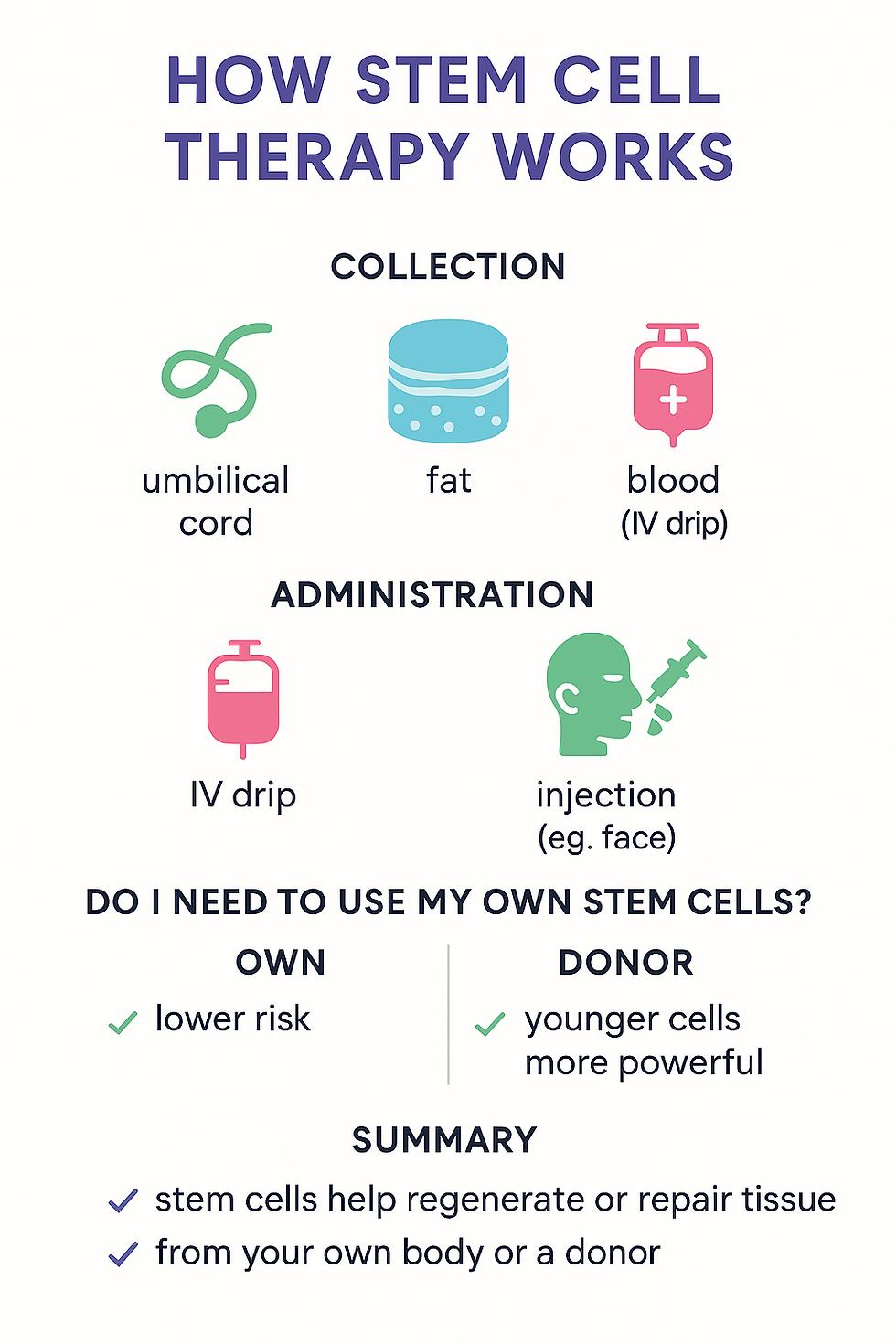
How Stem Cell Therapy Works
Stem cells have a unique ability to renew themselves and transform into different types of cells.
This regenerative potential allows them to:
Repair damaged or aging tissues
Reduce inflammation
Support skin healing and rejuvenation
Enhance overall wellness
The “Homing Effect”
As covered in our earlier article, stem cells naturally travel to damaged or stressed tissues — almost like a built-in GPS. This targeted migration increases the effectiveness of treatment.
Stem Cell Exosomes
Stem cells also release microscopic particles called exosomes (which are often used nowadays in anti-aging cosmetic products), which carry proteins and genetic signals that:
Encourage repair
Reduce inflammation
Support tissue rejuvenation
This is why stem cell therapy is often considered a powerful add-on to anti-aging and wellness treatments.
Where Stem Cells Are Collected From
Different sources offer different benefits. Here are the most commonly used:
1️⃣ Fat Stem Cells (Adipose-Derived)
Highest concentration of stem cells. Popular for aesthetic and regenerative treatments
Fat tissue contains up to 100,000× more stem cells than cord blood, making it one of the most effective options for rejuvenation.
Collection method: A small, localized liposuction removes a small amount of fat, which is then processed to isolate stem cells.
Perfect for:
Skin rejuvenation
Facial anti-aging
Post-procedure healing
Tissue repair
2️⃣ Blood Stem Cells (Peripheral Blood)
Often collected using apheresis, where blood is cycled through a machine to extract stem cells.
Commonly used for:
Immune-related treatments
Blood disorders
Systemic wellness therapies
3️⃣ Umbilical Cord Stem Cells
Collected at birth and stored in specialized banks.
Benefits:
Young, highly regenerative cells
No invasive extraction needed
Used in:
Some regenerative or wellness programs
Research-based anti-aging protocols
How Stem Cells Are Processed
To ensure safety and effectiveness, stem cells undergo several quality-controlled steps:
Isolation: Stem cells are separated from fat, blood, or cord tissue using specialized methods.
Purification: Unwanted cells, oils, and impurities are removed.
Concentration: The stem cells are condensed to increase potency.
Quality control: Every batch is tested for viability, sterility, and potency to ensure safety.
At reputable medical facilities, this occurs in a controlled, sterile laboratory environment following strict medical standards.
How Stem Cells Are Administered into the Body
Different goals require different delivery methods:
1️⃣ Direct Stem Cell Injections
Ideal for targeted repair — such as:
Facial rejuvenation
Joints
Localized tissue damage
This method helps maximize the “homing effect.”
2️⃣ Stem Cell IV Drip (Intravenous)
Allows stem cells to travel throughout the body, supporting systemic rejuvenation. Often used in general anti-aging or wellness programs.
3️⃣ Topical or Local Application
Stem cell–derived exosomes or growth factors may be applied to the skin, especially after:
Laser treatments
Microneedling
Facial procedures

Practical Considerations for Stem Cell Therapy
Stem cell therapy is promising — but it must be approached safely and realistically.
Source matters: Fat-derived stem cells have the highest concentration and are ideal for beauty-related rejuvenation.
Processing quality: Only choose clinics with proper lab facilities and transparent protocols.
Administration method: Your goals determine whether injection, IV, or topical application is best.
Realistic expectations: Stem cells support your body’s natural healing. They don’t instantly reverse aging or act as a miracle cure.
Research and safety: Work with teams who prioritize safety, research, and medical accuracy.
Planning Anti-Aging or Regenerative Treatments in Korea?
KGlow offers full concierge care so you can focus on your wellness journey:
✔ Trusted hospitals that follow proper lab protocols
✔ Medical translators & private coordinators
✔ Transparent explanations without pressure
✔ Itinerary planning, transfers & post-care support

Book a free consultation with us to plan your Korea treatment journey.
Instagram: @kglow.my


Comments