-01_edited_edited_edited.png)
Stem Cell Therapy for Anti-Aging: Benefits, Risks, and What to Know
“Can I get stem cell injections to look younger?”
You’d be surprised how often people ask this.
Stem cells have become a hot topic in beauty, wellness, and regenerative medicine — but they’re also one of the most misunderstood areas of modern science. Today, let’s break everything down clearly, simply, and accurately, so you can finally understand what stem cells really are, what they can (and can’t) do, and where current medical research is heading.
🔬 What Exactly Are Stem Cells?
Our bodies contain around 60 trillion cells — but they all began from one special type of “seed cell”: Stem cells.
Stem cells have two powerful abilities:
Self-renewal — they can make more of themselves
Differentiation — they can transform into other types of cells (skin, muscle, nerves, etc.)
This means stem cells play a big role in repairing damaged tissues or replacing cells lost to aging or disease.
🧬 The 3 Types of Stem Cells (What’s Safe & What’s Not)
1. Embryonic Stem Cells
These come from early-stage embryos and can become any kind of cell in the body.
Pros:
✔ Extremely versatile
Cons:
✘ Ethical issues (they come from fertilized eggs)
✘ Can turn into cancer cells
✘ Not used in clinical beauty/anti-aging today
✘ Famous for controversies (e.g., Hwang Woo-suk scandal)
Because of ethical and safety concerns, these are not used for cosmetic or clinical treatments.
2. Induced Pluripotent Stem Cells (iPSCs)
These are normal adult cells that scientists reprogram to behave like embryonic stem cells.
Pros:
✔ No ethical issues
✔ Highly flexible
Cons:
✘ Still in experimental research stage
✘ Genetic safety not yet guaranteed
✘ Potential immune rejection
These are not used for cosmetic or regenerative treatments yet — mostly lab research.
3. Adult (Somatic) Stem Cells — The ones actually used today
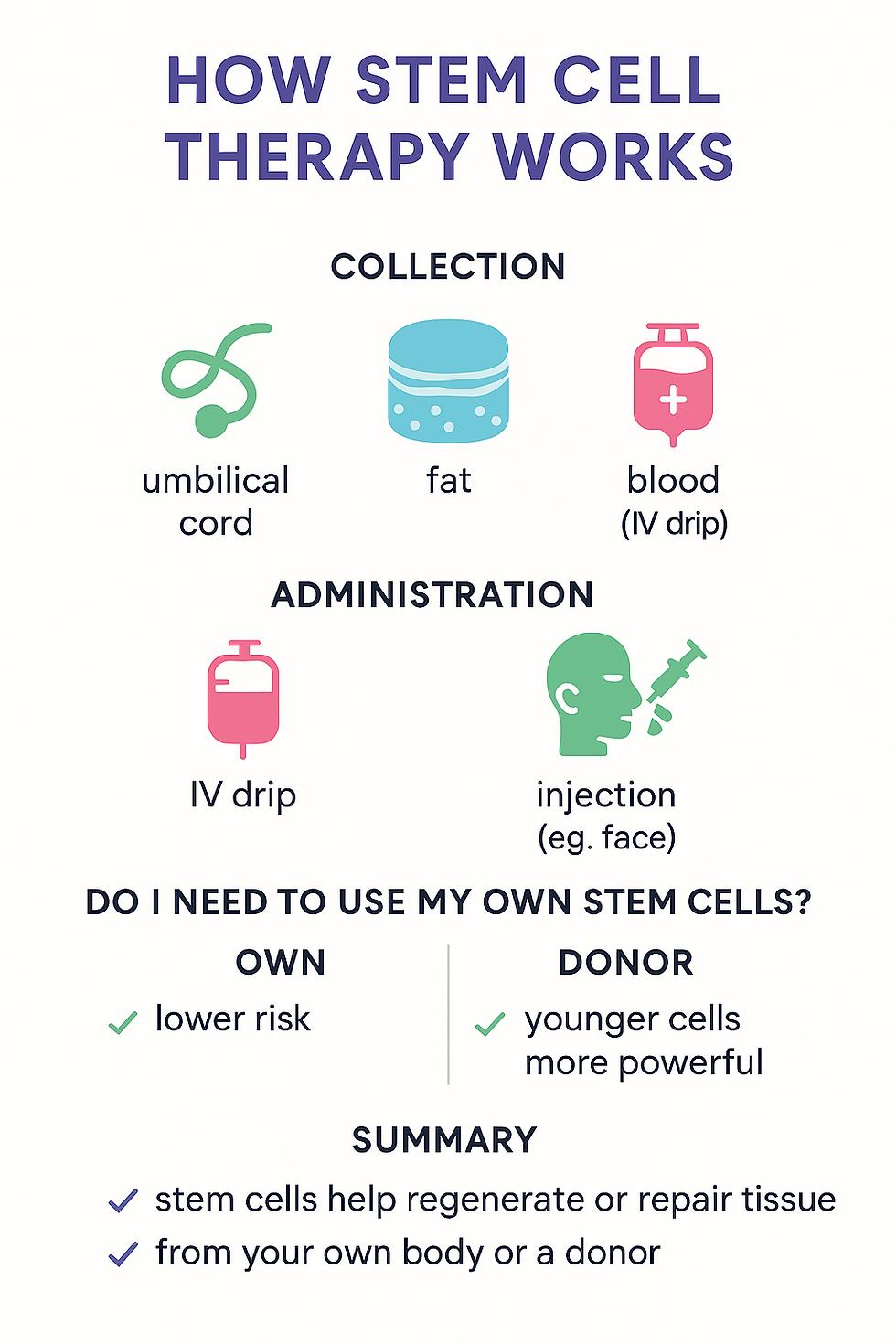
These live naturally inside your body and help repair tissues when you are injured or aging. They are already partially “specialized” (unlike embryonic cells), which makes them safer and more stable.
Common sources:
Blood
Bone marrow
Fat (adipose tissue)
Cord blood (only available during birth)
Most clinically used stem cell treatments today come from adult stem cells, especially fat-derived stem cells.
🟡 Why Fat-Derived Stem Cells Are So Popular
Fat tissue has become the top source for stem cell treatment because it contains huge amounts of stem cells — far more than bone marrow or blood.
📌 Stem cell concentration comparison
vs. bone marrow → up to 500× more
vs. cord blood → over 100,000× more
Other advantages:
✔ Easy to extract
✔ Large quantities available
✔ No immune rejection (if using your own fat)
✔ No need for long cell-culturing processes
✔ Lower cancer risk compared to embryonic cells
A single 100cc of fat (about one small liposuction session) can yield millions of usable stem cells.
🎯 What Can These Stem Cells Do?
Adult stem cells — especially from fat — show promising effects in:
Tissue regeneration
Reducing inflammation
Improving autoimmune or allergy-related conditions
Supporting healing in damaged tissues
Rejuvenation treatments
One remarkable trait is the Homing Effect: Stem cells can naturally migrate to the injured or damaged area in the body. You don’t need to “direct” them — they find their way.
🛑 But… Are Stem Cells a Miracle Cure?
Short answer: No — and be careful with exaggerated marketing.
Some clinics claim:
“Stem cells can heal everything!”
“Reverse aging instantly!”
“Fix chronic diseases in one injection!”
These are overpromises.
Yes, stem cells show very exciting potential.
Yes, research is active and growing every year.
Yes, many published studies show benefits.
But they are not magic and not guaranteed to fix every problem.
🔐 What About Safety?
A major study tracking fat-derived stem cell treatments for up to 54 months found:
No significant side effects
No cancer formation
No immune rejection when using your own cells
Fat-derived stem cells are considered one of the safest forms currently used in regenerative medicine — as long as they are processed in a sterile, closed system.
🧴 Should You Get Stem Cell Injections for Anti-Aging?
Here’s the balanced truth:
It may help if:
you want regeneration or improved healing
you’re combining it with medical treatments
you have realistic expectations
the clinic uses proper protocols & certified systems
It won’t help if:
you expect to look 10 years younger instantly
you believe it can “cure everything”
you go somewhere with unsafe or unproven methods
💡 A smart strategy
If you're already undergoing liposuction or fat-harvesting procedures, saving and using your stem-cell-rich fat is a valuable option — instead of throwing it away.
🌟 Final Thoughts
Stem cells — especially those from fat tissue — hold enormous potential for the future of anti-aging and regeneration. Scientists are still discovering their full abilities. Used safely and correctly, they may become one of the most important medical resources for human health in our lifetime.
Planning Anti-Aging or Regenerative Treatments in Korea?
KGlow offers full concierge care so you can focus on your wellness journey:
✔ Trusted hospitals that follow proper lab protocols
✔ Medical translators & private coordinators
✔ Transparent explanations without pressure
✔ Itinerary planning, transfers & post-care support

Book a free consultation with us to plan your Korea treatment journey.
Instagram: @kglow.my
Comments